

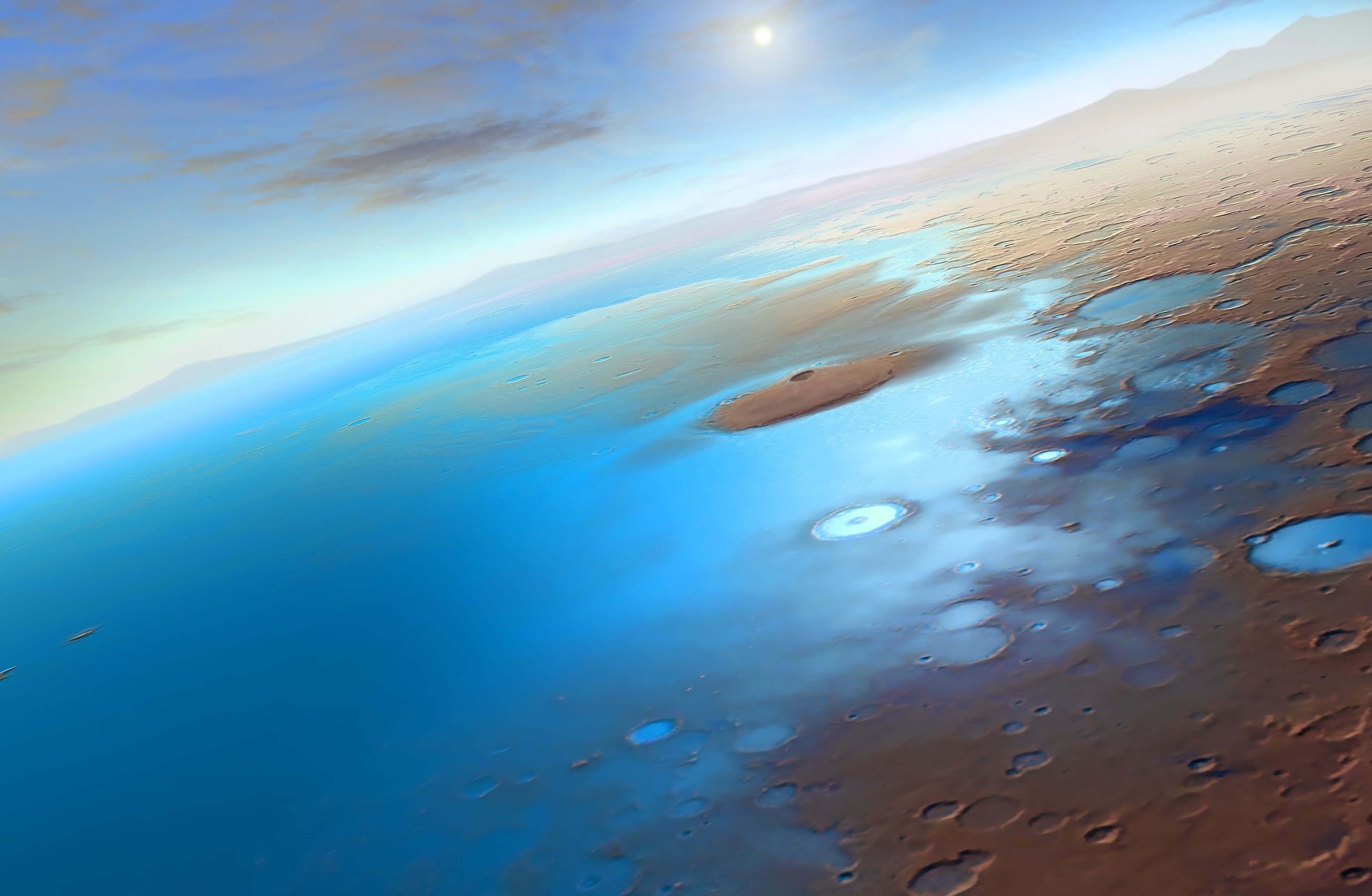
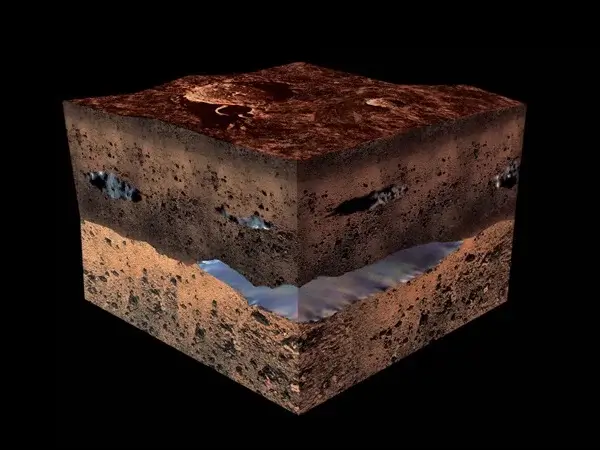
When you hear that Mars lost ocean waters billions of years ago, you might imagine a dry, desolate world stripped bare by time—and you wouldn’t be far off. But the full story of what happened to Mars’ ancient seas is far more intriguing and, surprisingly, more hopeful. New research suggests that much of that water may not be lost to space at all, but rather hidden—trapped beneath the surface of the Red Planet.
A Watery Past on a Frozen World
Mars wasn’t always the barren, rust-red rock we see today. Around 3 to 4 billion years ago, scientists believe it was home to vast oceans, rivers, and even rainfall. NASA’s Viking missions in the 1970s first hinted at the possibility, but it was the later observations from spacecraft like Mars Reconnaissance Orbiter and the Curiosity rover that began to paint a clearer picture. Ancient riverbeds, mineral deposits, and erosion patterns all point to a watery Martian past.
Researchers estimate that Mars once had enough water to cover the entire planet in a layer over 100 meters deep—possibly much more concentrated in the northern lowlands, forming a vast ocean. But over time, most of that surface water disappeared. The question is: where did it go?
A Leaky Atmosphere and a Subterranean Mystery
For decades, scientists assumed that Mars’ thin atmosphere, combined with its lack of a magnetic field, allowed solar winds to gradually strip the planet of its water. Indeed, data from NASA’s MAVEN mission (Mars Atmosphere and Volatile EvolutioN) has shown how particles in Mars’ upper atmosphere are constantly being blown away into space. But this alone doesn’t explain the full disappearance.
In a 2021 study led by Eva Scheller and Bethany Ehlmann at Caltech, researchers suggested that up to 99% of Mars’ original water may actually still be there—locked away in the planet’s crust. Their work, based on mineral data collected by orbiters and rovers, found that Martian rocks absorbed water through a process known as chemical weathering, in which water molecules bind to minerals like clays and sulfates. This means that instead of being lost to space, much of the water could still be underground, chemically trapped or stored as ice.
Clues from Rovers and Orbiters
NASA’s Curiosity and Perseverance rovers continue to find compelling evidence of ancient water activity. Curiosity, exploring Gale Crater, has uncovered sediment layers that resemble those formed by lakes and rivers on Earth. Meanwhile, Perseverance, which landed in Jezero Crater in 2021, is exploring an ancient river delta—a feature only possible in a once-wet environment.
On a broader scale, the Mars Express mission from the European Space Agency and NASA’s Mars Odyssey have detected signs of subsurface water ice and hydrated minerals across vast regions of the planet. These findings bolster the theory that Mars’ water didn’t entirely vanish, but instead migrated underground—perhaps even into deep aquifers that could still exist today.
What Lies Beneath?
The notion that Mars holds onto its ancient water deep underground is an exciting one, especially for future exploration. Not only could this hidden reservoir help us understand the planet’s climate history, but it might also be a critical resource for future human missions. Water is not only vital for drinking and growing food; it can also be converted into oxygen and rocket fuel.
More tantalizing still, underground water could provide a potential habitat for microbial life. If Mars ever hosted life, the safest refuge from radiation and extreme cold would be below the surface—right where the water may still be.
Looking Ahead
Mars remains a world of mysteries, but every rover wheel that turns and every satellite pass brings us closer to solving them. As upcoming missions like ESA’s ExoMars rover and future NASA projects aim to drill deeper into the Martian crust, we may soon confirm just how much of that ancient ocean remains—and what secrets it holds.
So while Mars may have lost ocean waters from its surface, it hasn’t necessarily lost them to the void of space. In fact, they may still be with us—hidden, waiting, and perhaps holding the keys to understanding both alien worlds and our own.